ChainOpera AI Token Experiences Steep Drop and Highlights Wider Dangers in AI-Based Cryptocurrency Initiatives
- ChainOpera AI's 2025 token collapse (99% loss) exposed systemic risks in AI-driven crypto projects through structural, governance, and technical vulnerabilities. - Extreme centralization (88% in ten wallets) worsened liquidity risks, while C3.ai's governance failures and regulatory pressures accelerated investor flight to stable assets. - Technical flaws in AI-integrated blockchains and lack of audits highlighted urgent need for decentralized governance, AI-powered compliance tools, and real-time vulnera
The Fall of ChainOpera AI: Lessons in AI-Crypto Risk
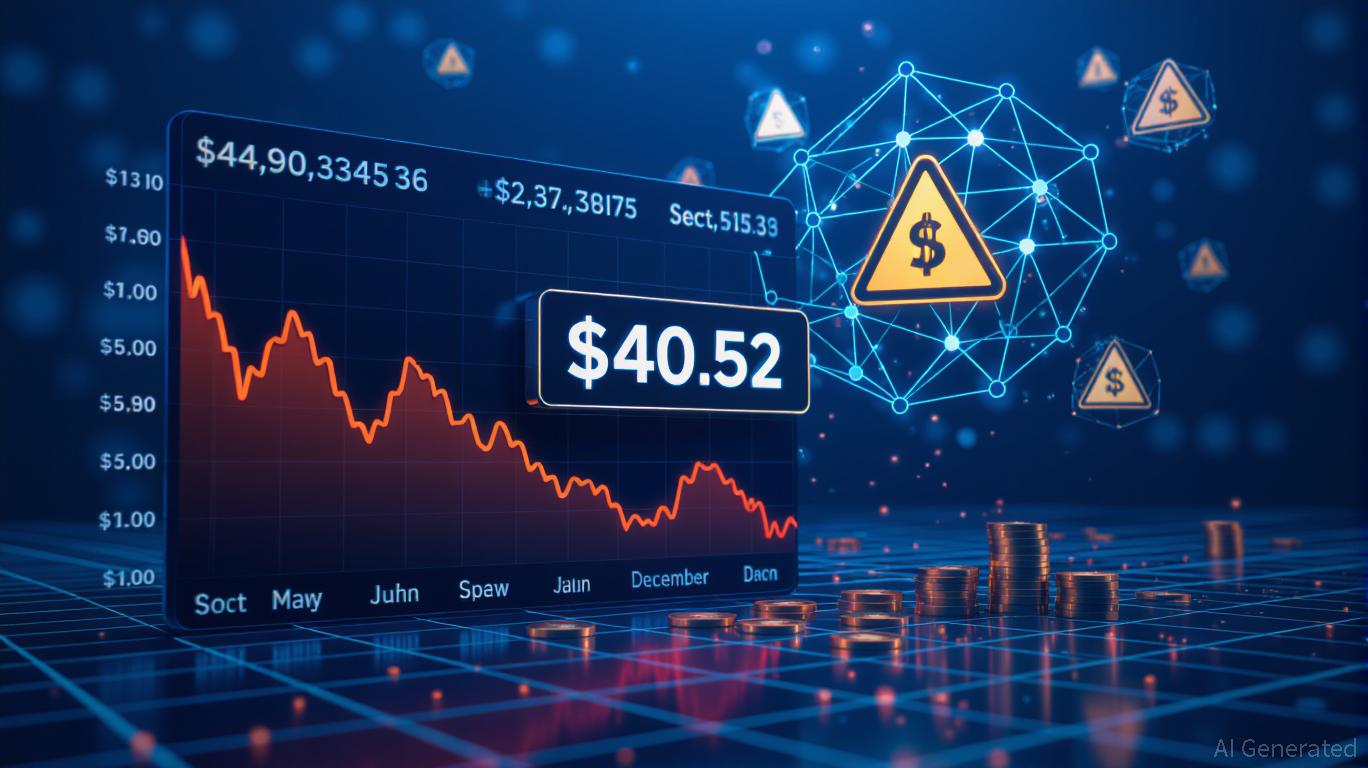
In late 2025, ChainOpera AI (COAI) experienced a catastrophic decline, with its value dropping from $44.90 in October to just $0.52 by December—a staggering loss exceeding 99%. This event has become a key example of the inherent dangers within AI-powered cryptocurrency ventures. The rapid downfall, fueled by weaknesses in structure, governance, and broader economic forces, highlights the pressing need for thorough risk evaluation and careful scrutiny in the AI-crypto industry.
Concentration of Tokens and Liquidity Challenges
One of the primary factors behind COAI’s downfall was the extreme concentration of token ownership. Reports indicate that ten wallets held 88% of the total supply, making the project highly susceptible to price manipulation and liquidity crises. This lack of distribution not only compromised market stability but also diminished investor trust. Such centralization is a recurring issue in many AI-crypto projects, where early investors and insiders often receive the majority of tokens, sidelining true decentralized governance.
Governance Failures and Leadership Turmoil
The situation worsened due to governance missteps by COAI’s parent company, C3.ai. The company reported a $116.8 million loss in the first quarter of 2025, and ongoing leadership instability further eroded confidence in the project’s sustainability. Effective oversight is crucial in AI-crypto initiatives, given the complexity of the technology and the need to comply with evolving regulations. Experts stress that transparent leadership changes and decentralized governance are essential for reducing such vulnerabilities.
External Pressures: Economic and Regulatory Forces
In 2025, the entire crypto market faced significant challenges, including regulatory ambiguity and economic headwinds. U.S. policy, shaped by executive directives, promoted technology-neutral rules and public blockchain use, but left many AI-crypto projects in uncertain territory. Regulatory fines surged by 417% to $1.23 billion that year, intensifying scrutiny of speculative tokens like COAI. As a result, investors increasingly favored more stable AI-related stocks and Bitcoin, which captured a 58.4% market share during this period.
Technical Flaws and Smart Contract Dangers
Technical shortcomings within AI-integrated blockchain systems also contributed to COAI’s collapse. Research from 2025 revealed a 270% increase in vulnerabilities related to model context protocols and a 67% rise in configuration errors. Simulated attacks using advanced AI models, such as GPT-5 and Claude Opus 4.5, demonstrated that smart contract breaches could result in losses up to $4.6 million in test environments. These findings underscore the necessity for advanced due diligence, including AI-powered audits and real-time monitoring of vulnerabilities.
Best Practices for Due Diligence in AI-Crypto
In light of COAI’s failure, industry specialists recommend robust due diligence frameworks tailored to AI-crypto projects. Key recommendations include:
- Decentralized Token Allocation: Ensure fair distribution to prevent liquidity issues and manipulation.
- AI-Enhanced Compliance: Utilize machine learning tools to automate anti-money laundering (AML) and know-your-customer (KYC) processes, improving fraud detection.
- Proactive Smart Contract Audits: Employ AI-driven auditing tools to identify and address vulnerabilities before deployment.
- Regulatory Compliance: Stay aligned with evolving legal frameworks, such as the SEC’s digital asset classifications, to ensure ongoing compliance.
Managing Volatility and Speculation
Given the speculative nature of AI-crypto assets, risk management strategies are essential. Diversification, careful position sizing, and the use of stop-loss orders are recommended to limit exposure. Technology leaders should rigorously test blockchain strategies and evaluate their reliance on token economics, as market swings can destabilize financial health. Additionally, employing dollar-cost averaging and maintaining 5–15% of portfolios in stablecoins can help cushion against sharp downturns.
Final Thoughts
The collapse of COAI stands as a stark warning for the AI-crypto sector, revealing the interconnected risks of structure, governance, and technology. While advancements in regulatory clarity and AI-based compliance tools offer hope for greater resilience, the industry must focus on transparency, decentralized decision-making, and strong technical safeguards. For investors, comprehensive due diligence should extend beyond token metrics to include practical utility, regulatory alignment, and adaptive risk controls. The lessons learned from COAI will be instrumental in guiding the future development of safer and more robust AI-driven crypto projects.
Disclaimer: The content of this article solely reflects the author's opinion and does not represent the platform in any capacity. This article is not intended to serve as a reference for making investment decisions.
You may also like
The Influence of TWT’s Updated Tokenomics on the Dynamics of the Cryptocurrency Market
- TWT/TON's 2025 tokenomics shift from speculative governance to utility-driven ecosystem integration, embedding tokens in platform functions like Trust Premium. - Deflationary mechanisms (88.9B tokens burned) and cross-chain FlexGas systems create scarcity, mitigating oversupply risks while expanding transactional use cases. - Governance reforms prioritize community voting on fees and partnerships, but face challenges from regulatory uncertainty and Solana network dependencies. - Institutional adoption gr

Astar (ASTR) Price Spike: Unraveling the Reasons for Recent Market Fluctuations
- Astar (ASTR) price surged amid Tokenomics 3.0 reforms, institutional capital inflows, and strategic partnerships in November 2025. - Deflationary mechanisms like Burndrop and a $29.15M buyback program reduced circulating supply to 8.24B tokens. - Galaxy Digital's $3. 3M OTC purchase and Coinbase listing roadmap signaled institutional confidence in ASTR's long-term potential. - Partnerships with Sony , Toyota , and Japan Airlines expanded ASTR's real-world utility in logistics and digital identity sectors
The Increasing Importance of STEM Education as a Strategic Asset in a Technology-Focused World Economy
- U.S. STEM education is reshaping curricula and partnerships to meet AI, cybersecurity, and renewable energy demands, driven by $75M investments like Farmingdale State College's expanded Computer Sciences Center. - Public-private collaborations, including NSF AI Education Act and Google/IBM workforce pledges, are accelerating workforce readiness through AI research and micro-credential programs. - STEM-focused universities achieved 11.5% average endowment returns in 2025, but proposed excise taxes threate

Aster DEX: Redefining the Landscape of Decentralized Trading
- Aster DEX is reshaping DeFi by bridging retail and institutional markets through hybrid AMM-CEX architecture and strategic partnerships. - The platform achieved 1.848 million users and $3.32B weekly trading volume in 2025, with $5.7B institutional buy volume in late 2025. - RWA integrations (gold, equities) and 7% staking rewards drive institutional adoption, while gasless trading and TWAP orders enhance execution efficiency. - Aster's 400% TVL growth and 5-7% annual token burns create scarcity, supporti